PROJECT TEAM MEMBER PARTICIPATED IN AN INTERNATIONAL GOOSE SURVEY EXPEDITION IN KAZAKHSTAN
02.11.2011
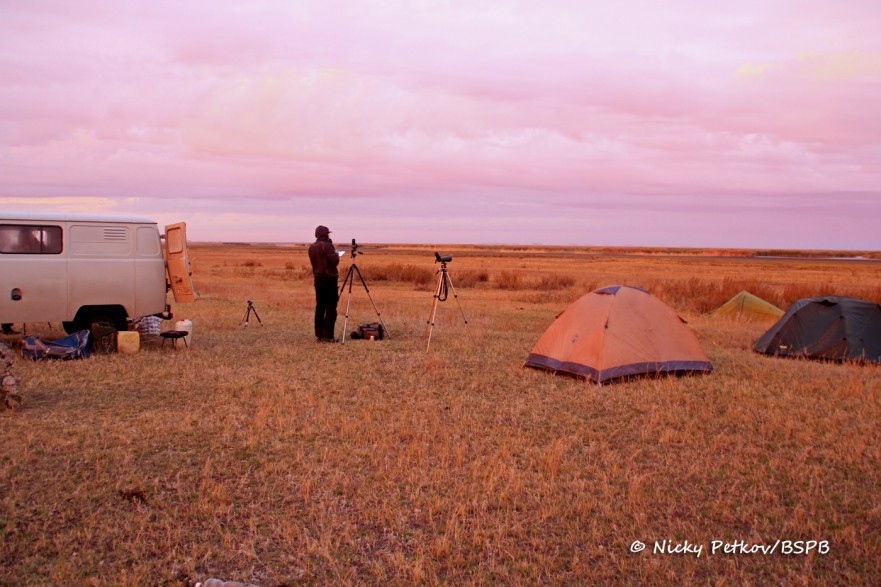
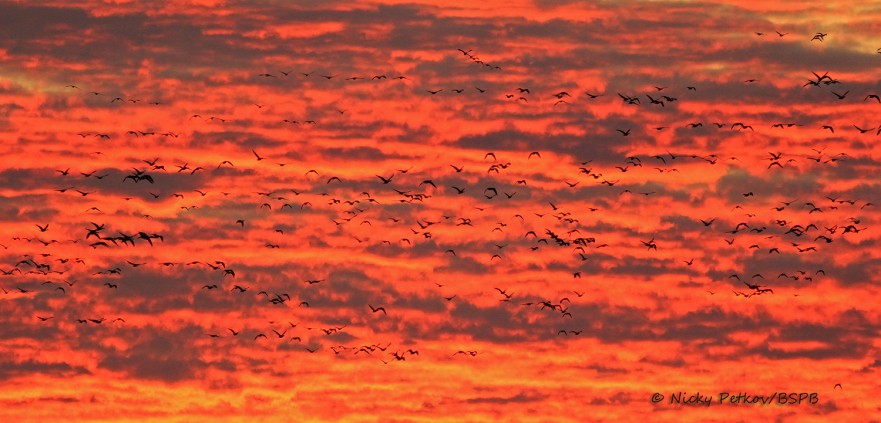
In the first half October Dr. Nicky Petkov (the scientific consultant to the project) took part in a team of international experts in the autumn Goose monitoring in Kazakhstan. The survey expedition was organized by the local BirdLife partner – the Association for Conservation of Biodiversity of Kazakhstan (ASBK) and the AEWA Secretariat. Work was funded under the project of the AEWA Leser White-fronted Goose Working Group. The foreign team members included one Norwegian, one Bulgarian, one Russian and two Fins split into two field teams and one additional team of Kazakh fieldworkers only. The three teams simultaneously headed off to survey key sites for the migrating geese in Northern Kazakhstan and Kustanai regions. For 12 days the teams travelled across the rough Kazakhstanian roads to gather data on the population size of the globally threatened Lesser White-fronted Goose (
Anser erythropus) and the Red-breasted Goose (
Branta ruficollis). Nicky Petkov joined a team of Tomas Aarvak from NOF/BirdLife Norway, Alexey Timoshenko from ACBK and two more local team members.
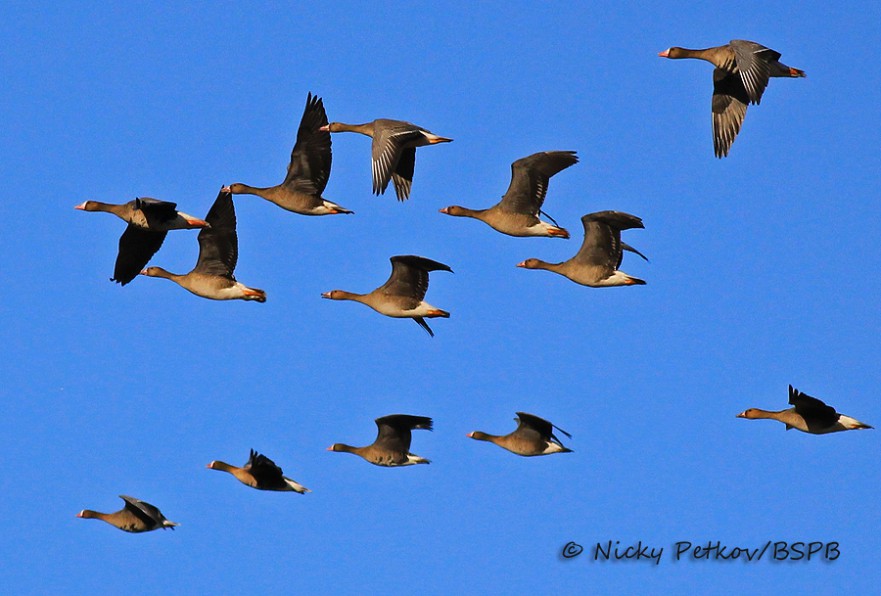
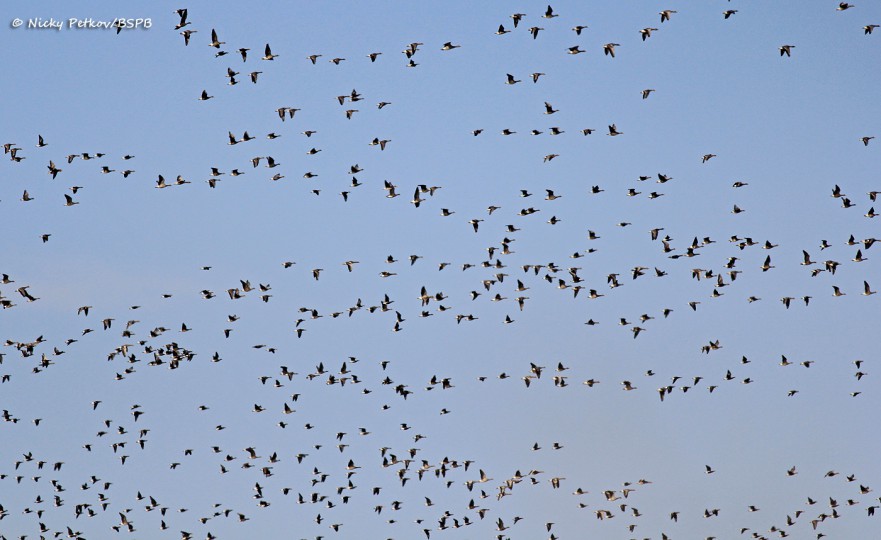
More than 10 lakes of different size were surveyed in search of the elusive Lesser Whitefronts and the sparkiling Redbreasts. The first Lessers were encountered at a lake called Ruskij Zharkol, where flock of some 70-80 000 geese was found, mostly Greater White-fronts (
Anser albifrons), but amongst them ca. some almost 1200 Lessers, but very few Redbreasts. The lake is part of hunting estate in Kazakhstan, but the local rules prohibit any hunting around the lake. In addition some of the arable fields around the area is assigned for game resting areas with no hunting. In this way the hunters ensure that geese still can forage at peace at part of the hunting area and do not devastate them throughout the day. It seems a lot could be learned from the hunting management practice in Kazakhstan compared to what is happening in Bulgaria during hunting season. The lake was full of other waterfowl – diving and dabbling ducks, large flock of 600 – 700 White-headed Ducks (Oxyura leucocephala), Ruddy Shelducks (Tadrona ferruginea) and many others.
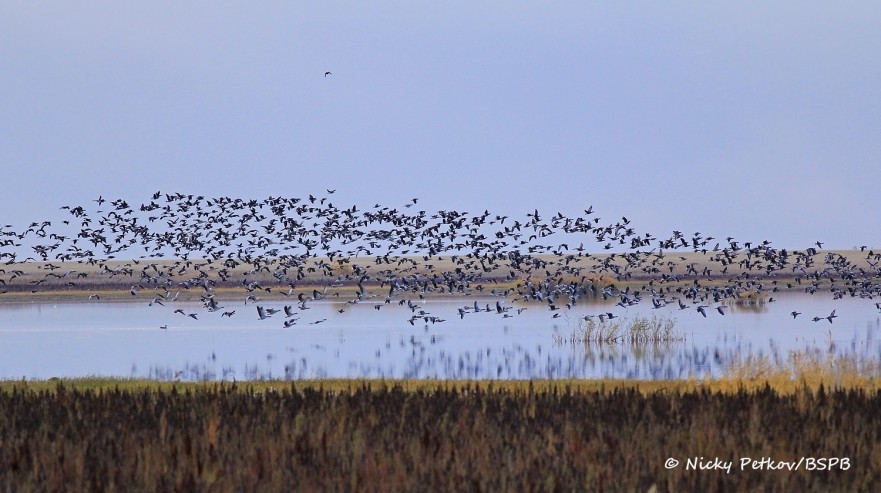
The first lake to encounter large numbers of Red-breasts was Koibagor Lake – a local IBA. There were some 6000 Red-breasts at the lake and large number of Whitefronts. The scene was sweetened by some 5 Spotted Eagles (
Aquila calnga) – another globally threatened species in the area and smaller number of White-tailed Eagles (
Halliaeetus albicilla), however very few Lesser Whitefronts were encountered in this lake. The next exciting lake to spot larger number of RBGs and LWFG was Zhaman Zharkol. A good flock of some 3200 Redbreasts was counted there.
An alarming fact during the trip was the low percentage of young geese counted at various places. There were counted some 10% young birds in the Greater Whitefronts and just around 9.5% youngs in the flocks of the Red-breasted Goose. This is an indication of a very bad breeding season in the Arctic Russia this summer. In recent years the data was suggesting good breeding success for the RBGs with some 25% young calculated last winter in Bulgaria in early January indicating the good year the species had for breeding. We’ll have to wait to see the final results of the counts and see how many youngs will arrive at North-East Bulgaria but let’s hope that this small percentage of yearlings is only for small part of the population. The initial results of the survey indicate a global population of some 45-50 000 Red-breasted Geese which indicated the stabilization of the population though still not recovered to former numbers.


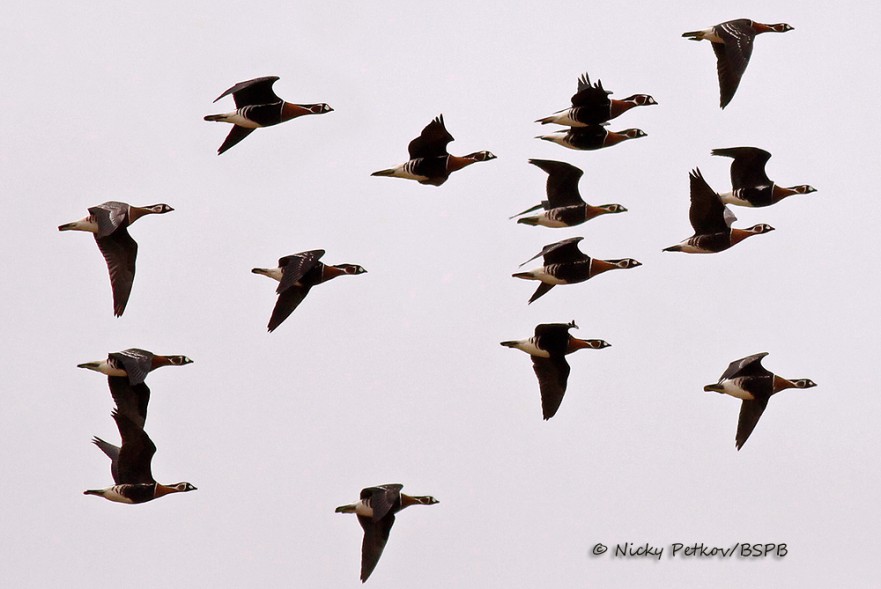 In the first half October Dr. Nicky Petkov (the scientific consultant to the project) took part in a team of international experts in the autumn Goose monitoring in Kazakhstan. The survey expedition was organized by the local BirdLife partner – the Association for Conservation of Biodiversity of Kazakhstan (ASBK) and the AEWA Secretariat. Work was funded under the project of the AEWA Leser White-fronted Goose Working Group. The foreign team members included one Norwegian, one Bulgarian, one Russian and two Fins split into two field teams and one additional team of Kazakh fieldworkers only. The three teams simultaneously headed off to survey key sites for the migrating geese in Northern Kazakhstan and Kustanai regions. For 12 days the teams travelled across the rough Kazakhstanian roads to gather data on the population size of the globally threatened Lesser White-fronted Goose (Anser erythropus) and the Red-breasted Goose (Branta ruficollis). Nicky Petkov joined a team of Tomas Aarvak from NOF/BirdLife Norway, Alexey Timoshenko from ACBK and two more local team members.
More than 10 lakes of different size were surveyed in search of the elusive Lesser Whitefronts and the sparkiling Redbreasts. The first Lessers were encountered at a lake called Ruskij Zharkol, where flock of some 70-80 000 geese was found, mostly Greater White-fronts (Anser albifrons), but amongst them ca. some almost 1200 Lessers, but very few Redbreasts. The lake is part of hunting estate in Kazakhstan, but the local rules prohibit any hunting around the lake. In addition some of the arable fields around the area is assigned for game resting areas with no hunting. In this way the hunters ensure that geese still can forage at peace at part of the hunting area and do not devastate them throughout the day. It seems a lot could be learned from the hunting management practice in Kazakhstan compared to what is happening in Bulgaria during hunting season. The lake was full of other waterfowl – diving and dabbling ducks, large flock of 600 – 700 White-headed Ducks (Oxyura leucocephala), Ruddy Shelducks (Tadrona ferruginea) and many others.
The first lake to encounter large numbers of Red-breasts was Koibagor Lake – a local IBA. There were some 6000 Red-breasts at the lake and large number of Whitefronts. The scene was sweetened by some 5 Spotted Eagles (Aquila calnga) – another globally threatened species in the area and smaller number of White-tailed Eagles (Halliaeetus albicilla), however very few Lesser Whitefronts were encountered in this lake. The next exciting lake to spot larger number of RBGs and LWFG was Zhaman Zharkol. A good flock of some 3200 Redbreasts was counted there.
An alarming fact during the trip was the low percentage of young geese counted at various places. There were counted some 10% young birds in the Greater Whitefronts and just around 9.5% youngs in the flocks of the Red-breasted Goose. This is an indication of a very bad breeding season in the Arctic Russia this summer. In recent years the data was suggesting good breeding success for the RBGs with some 25% young calculated last winter in Bulgaria in early January indicating the good year the species had for breeding. We’ll have to wait to see the final results of the counts and see how many youngs will arrive at North-East Bulgaria but let’s hope that this small percentage of yearlings is only for small part of the population. The initial results of the survey indicate a global population of some 45-50 000 Red-breasted Geese which indicated the stabilization of the population though still not recovered to former numbers.